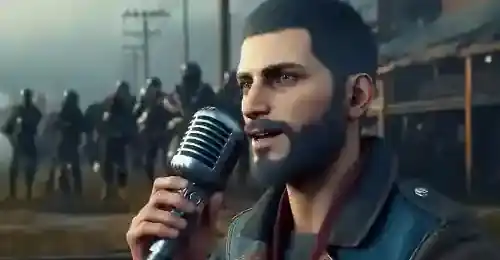
Voice Acting in Video Games
Posted August 5, 2025
Voice acting for games has rapidly evolved from a nice-to-have feature into a core element of modern video game development. With players demanding deeper narratives, more lifelike characters, and genuine emotional engagement, developers increasingly rely on voice talent to bring their stories to life. Whether it’s a stoic warrior in a fantasy RPG or a quirky sidekick in an indie platformer, voice actors are essential in creating immersive and believable virtual worlds.
Early video games were limited by hardware constraints, and sound was mostly confined to simple effects or chiptune music. Characters rarely spoke at all. It wasn’t until the late 1990s that fully voiced dialogue became common in mainstream games. Titles like Metal Gear Solid and Final Fantasy X demonstrated how spoken dialogue could enhance emotional depth and narrative complexity. Since then, the bar has been raised, with today’s AAA games featuring cinematic scripts rivaling Hollywood productions, often including motion capture and ensemble recording sessions. Yet voice acting in games remains fundamentally different from film or television in execution and design.
One of the unique challenges of gaming voice over is the non-linear nature of interactive media. Unlike film, where lines are delivered in sequence with a consistent emotional arc, game dialogue must account for player choices, branching storylines, and randomized events. A character might respond differently if the player befriends them, betrays them, or ignores them entirely, requiring the actor to maintain emotional consistency across multiple variations. The performance must feel authentic and seamless no matter how the player interacts with the game.
Another challenge is the sheer volume of lines. Major RPGs can require actors to record thousands of lines over weeks of sessions, covering greetings, combat reactions, and branching narrative outcomes. Maintaining vocal energy, clarity, and character integrity throughout this workload is demanding, often with little context for each line. Compounding this is the need for “effort sounds”, grunts, shouts, screams, sighs, and breaths that accompany actions like jumping, attacking, or taking damage. These are physically and vocally taxing, often recorded in short bursts to preserve the actor’s vocal health.
Creating believable characters requires a distinct vocal identity. Every memorable game character has a unique voice, shaped by accent, cadence, tone, and subtle emotional undercurrents. Skilled actors study a character’s backstory and motivations to inform their delivery. A battle-hardened knight may have a gravelly, deep voice, while a mischievous thief might speak quickly with nimble rhythms. Actors often must portray multiple characters in the same project, requiring versatility in pitch, pace, and accent to create distinguishable voices that enrich the game world. Emotional authenticity is equally critical, players connect with characters through vocal performances, whether it’s a heartfelt farewell, a tense confrontation, or a moment of joy. Iconic gaming moments, from Aerith’s death in Final Fantasy VII to the conversations between Joel and Ellie in The Last of Us, owe much of their impact to the strength of the voice acting.
Recording for games presents technical and logistical challenges as well. Actors often work alone, without scene partners, relying on director prompts or line descriptions to generate authentic emotional responses. Animatics, storyboards, or rough animations may be provided, but many sessions happen long before the final visuals are complete, requiring actors to imagine the scene. In addition, understanding game mechanics is essential. Characters may deliver the same line while standing idle, running, or taking damage, and actors must adjust their performance accordingly, adding strain, urgency, or breathlessness as needed. Combat-heavy games demand precise timing for shouts, spells, callouts, and warnings, blending technical precision with performance artistry.
The creation of compelling voice performances is a collaborative effort involving voice directors, writers, and localization teams. Directors guide tone and pacing, writers clarify context or adjust dialogue on the spot, and localization teams ensure timing and lip-sync consistency across languages. In larger projects, actors may also work alongside motion capture teams, physically performing as well as voicing their characters to create a more integrated performance.
An emerging trend in game development is performance capture, where actors’ movements and facial expressions are recorded alongside their voice. This creates hyper-realistic characters with lifelike gestures, eye movements, and micro-expressions. Performance capture blurs the line between voice acting and traditional screen acting, requiring actors to work in full-body suits and facial rigs. Games like Red Dead Redemption 2 and Hellblade: Senua’s Sacrifice showcase the potential of this technology, delivering performances that rival top-tier film and television.
Voice acting for games is a demanding art form that blends vocal technique, emotional authenticity, and adaptability. Actors navigate non-linear scripts, perform strenuous effort sounds, and often work without visual cues or partners, yet the reward is the creation of lasting, emotionally resonant characters that players remember for years. As video games continue to evolve as a storytelling medium, the role of the voice actor is more essential than ever. The next time a game moves you with a tearful farewell or a rousing call to arms, remember that it’s the voice behind the character that makes it all believable.